Many homes in Portugal have moisture stains on walls. The problem seems simple to fix: paint over it. But moisture on walls is the most common defect in Portuguese homes and also the most poorly treated, because when you paint over it, the stain returns within six months1. The reason is that there are three different types of moisture, and each requires its own technical solution. Identifying which one affects the house is the step missing before any painting.
Condensation: the problem that starts inside the home
How to identify condensation on walls
Condensation shows itself as black mould in corners of ceilings and walls, behind furniture pushed against walls, in bedrooms and bathrooms, with steamed windows in the morning, especially in winter and in poorly ventilated rooms. The cause is water vapour produced inside the home through breathing, showers, cooking and drying clothes, which condenses on cold surfaces.
In older homes, moisture is not always easy to identify, because a freshly painted room or strategically placed furniture can hide important signs2. A persistent musty smell, even when there are no visible stains, may indicate active condensation.
What to do before painting rooms with condensation
The problem cannot be solved with expensive paint. Mould appears when conditions are favourable: high humidity, poor air circulation, cold surfaces and organic matter where fungi can develop3. The solution involves improving ventilation, reducing moisture production inside the home and preventing surfaces from becoming cold.
Before painting:
- Open windows daily, especially after showers or cooking
- Check if there is mechanical ventilation in bathrooms and kitchens
- Avoid drying clothes inside rooms without ventilation
- Confirm that the wall is completely dry before applying any paint
The success of moisture-resistant painting depends more than 70% on prior surface preparation, because skipping this phase cancels out the performance of any premium paint.
Infiltration: water entering from outside
Signs of active infiltration
Infiltrations occur when water enters through cracks, roofs, facades or poorly sealed windows. An infiltration means water is entering through the roof, facade, windows, cracks or other vulnerable points, and identifying the source of moisture is the first step to choosing the right solution, because painting a wall or removing mould does not fix active infiltration.
Typical signs include:
- Yellowish or dark stains that worsen with rain
- Paint peeling or blistering
- Plaster crumbling or coming loose
- Moisture worsening on walls facing North or West
The climate in the north of the country creates conditions favourable to moisture, especially for lateral infiltrations, with heavy rainfall, proximity to the ocean and scattered population distribution, making northern Portugal prone to humidity problems.
Treatment before painting
Painting a wall with active infiltration is throwing money away. Water will continue to enter, and paint will peel or stain within weeks. Infiltration must be treated at its source:
- Repair visible cracks in plaster or facade
- Check the roof condition, loose tiles, flashings or blocked gutters
- Confirm the sealing of windows and doors
- Apply waterproofing to the facade if necessary
Only after solving the water entry does it make sense to prepare the surface and paint. Walls must be completely dry before the first coat.
Rising damp: the problem that climbs from the ground
How to recognise capillary moisture on walls
Rising damp is a common problem in many homes in Portugal, especially in older houses or those built on land with high soil moisture levels, consisting of water rising through tiny capillaries at the base of walls in many homes with deficient waterproofing between the floor and soil.
Characteristic signs are:
- Stains near the skirting board, rising to 50 or 80 centimetres
- Appearance of efflorescence (white crystals on the surface)
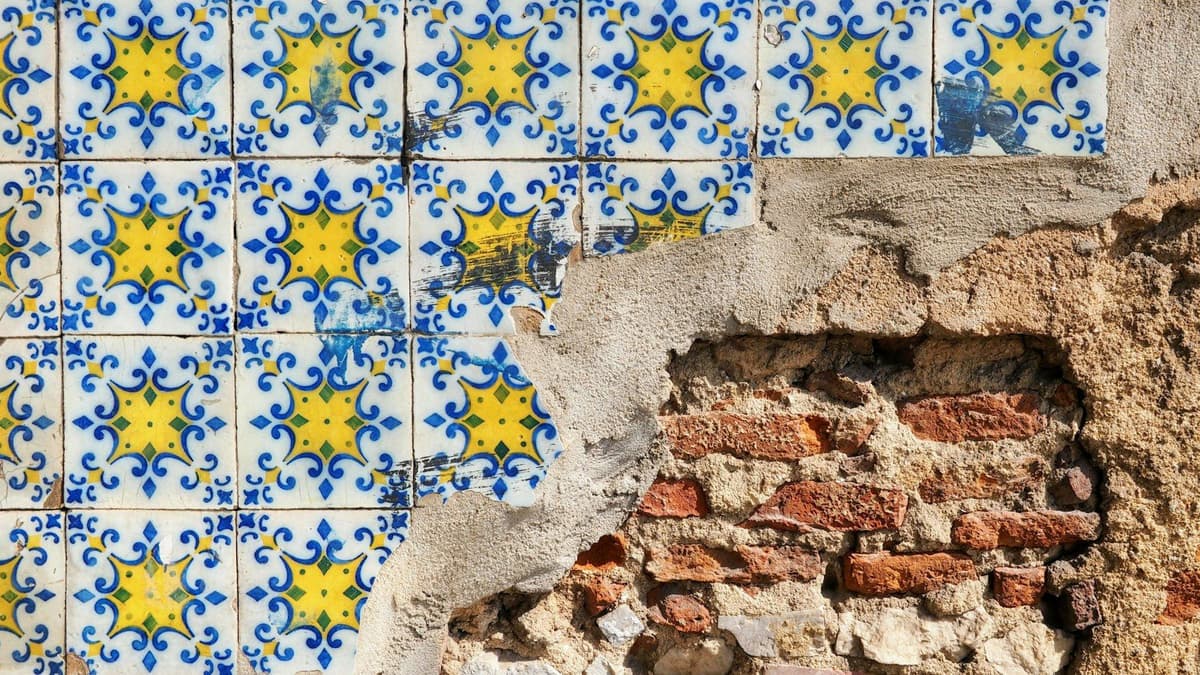
- Plaster crumbling or coming loose at the base of the wall
- Persistent moisture that does not disappear even in summer
This type of moisture is particularly common in older buildings without insulation between the foundation and floor. Soil water rises by capillary action, bringing mineral salts that damage plaster and prevent any paint from adhering.
The only solution that works long-term
If moisture is capillary rise, painting does not fix it, because it is absolutely necessary to treat the base of the wall. Applying moisture-resistant paint or special primer can mask the problem for a few months, but water will continue rising and efflorescence will reappear.
The solution involves creating a physical or chemical barrier that prevents water from rising. In severe cases, it may be necessary to cut the wall and insert a waterproof membrane, or inject products that block capillary action. Only after treating the cause can you repair the plaster, let it dry and paint.
Comparison: which type of moisture in each situation
| Symptom | Condensation | Infiltration | Rising damp |
|---|---|---|---|
| Mould in corners and ceilings | Yes | Rarely | No |
| Stains that worsen with rain | No | Yes | No |
| Moisture near the skirting board | No | Rarely | Yes |
| Efflorescence (white crystals) | No | No | Yes |
| Steamed windows | Yes | No | No |
| Paint peeling | Sometimes | Yes | Yes |
| Appears in winter | Yes | Depends | All year |
This table helps distinguish which type of moisture affects the home. Often more than one type is present at the same time, especially in older buildings. In that case, each problem must be treated in the correct order: first infiltration, then rising damp, and only at the end condensation.
What to do before requesting a quote for painting
Identifying the source saves money and redoing work
When someone requests a quote for painting a wall with moisture, the first question an experienced professional asks is never "how much does it cost". It is "what type of moisture is this". If the answer is unclear, the painting may not last six months.
Before applying any product, it is essential to identify the exact origin of the problem to ensure the effectiveness of the work and the durability of materials. This means the assessment should include:
- Photographs of the stains, including close-ups of the affected area
- Indication of when they appeared and whether they worsen at certain times of year
- Exact location (inside or outside, near the ground or ceiling, in which room)
- History of previous work on the wall (if it has been recently painted, if there were repairs)
On our platform, we always request photographs and videos of surfaces before finalising any painting proposal. This allows the professional to see the actual wall condition, identify the type of moisture and propose the correct treatment before painting. It avoids surprises during the work and ensures the job is done in the right order.
The correct order of work makes a difference
Once the type of moisture is identified, the sequence of work is always the same:
- Eliminate the cause (repair infiltration, treat rising damp, improve ventilation)
- Let the wall dry completely (may take days or weeks, depending on severity)
- Remove mould, loose paint and degraded plaster
- Repair plaster where necessary and let it harden
- Apply primer appropriate to the type of moisture that existed
- Paint with paint suitable for the room type and exposure
Skipping any of these steps increases the risk of paint failure. And skipping step 1, eliminating the cause, practically guarantees the problem will return.
Frequently Asked Questions
No. Moisture-resistant paints help protect surfaces where moisture existed in the past, but they do not solve the cause. If there is active infiltration or rising damp, paint may mask the problem for a few months, but water will continue entering and damage will worsen.
It is not recommended. Paint applied to a damp surface does not adhere properly, may form bubbles, peel quickly or create stains. Before painting, the wall must be completely dry. In cases of severe moisture, it may be necessary to wait several weeks after eliminating the cause.
If stains always return to the same place after painting, if there is a persistent musty smell, if the plaster is crumbling or if white crystals appear (efflorescence), the moisture is structural and needs specialist intervention before any painting. Trying to solve it with paint alone is wasting time and money.
It depends on the severity and type of moisture. A wall with condensation can dry in a few days if ventilation improves. A wall with infiltration or rising damp may need two to four weeks, or more, depending on plaster thickness and weather conditions. It is best to confirm with a moisture meter before proceeding to painting.

Ready to paint?
Get free quotes from verified local painters in minutes. No commitment.
Sources
External sources open in a new tab.
- Humidade nas Paredes: Causas, Como Identificar e Soluções Definitivas – Aresta Engenhariaaresta.com.pt
- CASAS DE PORTUGAL: Vai comprar uma casa antiga? 10 coisas para verificar antes de decidir | homifyhomify.pt
- Casas antigas em pedra, bolor e humidade: como a ventilação descentralizada pode resolver o problemasmartfire.pt