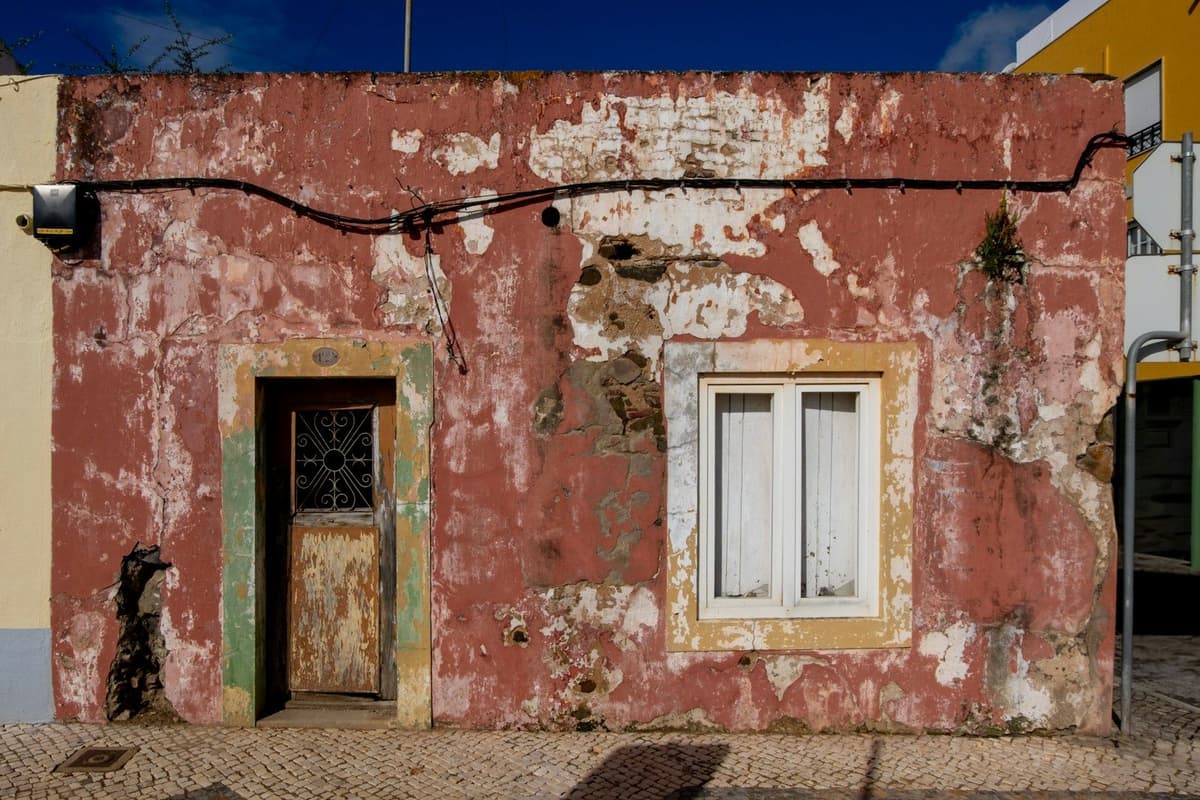
Hiring a professional painter does not end when the work is complete. Paint warranty in Portugal exists by law, but only works in practice when the property owner knows exactly what can be demanded and has proof of what was agreed. Many painting issues appear weeks or months later (stains, peeling, bubbles), and that is when you discover whether or not you are protected.
What the law guarantees in painting services
The legal warranty for services in Portugal is two years. This period applies to any painting work performed by a professional, whether indoors or on facades. During this period, the property owner has the right to claim defects resulting from poor execution or unsuitable materials, provided the problem was not caused by misuse or subsequent interventions.
The warranty covers situations such as paint that peels without apparent reason, bubbles that appear on well-prepared surfaces, stains that reappear after being treated, or finishes that do not match what was agreed. It does not cover, on the other hand, natural wear from use or damage caused by the property owner (scratches, impacts, new moisture caused by a leak that did not exist before).
To enforce the warranty, the property owner needs to be able to prove what was agreed. An accepted quote, an exchange of messages where the scope of work was made clear, or a photographic record of before and after help demonstrate that the problem did not exist at the beginning. The warranty should be recorded in writing in the quote, either as a specific clause or through a reference to the legal period.
What to check before accepting the quote
Before accepting any painting quote, it is important to confirm that three essential elements are clear: the exact scope of work (which rooms, how many coats, what type of surface preparation), the materials to be applied (brand, finish, colour), and the execution timeline. The more detailed the initial record, the easier it will be to claim later if something goes wrong.
On our platform, all job details are recorded online and are visible to the client, the professional, and the platform. This transparency protects both parties: the property owner knows exactly what they will receive, and the painter is certain they will not be asked for extra work without notice.
The quote should also make clear what is included in the surface preparation1. Sanding, filling cracks, applying primer or treating moisture stains are tasks that are part of the painting work, but they are not always made explicit in the quote. If they are not written down, the painter may refuse to perform them or charge extra at the end.
The platform also confirms that the professional is properly registered as self-employed or has an established company, saving the property owner that verification.
When to pay and how to protect the payment
Payment timing is one of the main sources of conflict in painting work. Paying everything upfront removes any pressure on the professional to finish the work well; paying everything at the end may leave the painter without means to buy materials or reserve the date.
On our platform, the payment model is always the same: 50% at the start (to reserve the date and purchase materials) and 50% at the end, after the work has been verified. This scheme protects both parties and avoids surprises.
Never paying the full amount upfront is an important guideline, and a phased payment agreement ensures that the service is performed as agreed2. Outside platforms with payment custody, the property owner should avoid paying more than half before seeing the work completed.
What to do when problems appear after the work
When defects appear after the painting is complete, the first step is to communicate the problem to the professional in writing (email, message on the platform, registered letter). Communication should be made as soon as the defect is detected, including photographs that clearly show the problem.
Written communication as soon as the problem is detected proves dates and protects the property owner's rights. Without a record of the complaint, it is difficult to prove later that the defect was communicated within the warranty period.
The professional has an obligation to repair defects covered by the warranty, at no additional cost. If they refuse, or if the repair does not resolve the problem, the property owner can demand a reduction in the price paid or, in serious cases, cancellation of the contract with reimbursement of the amount.
In Lisbon, Porto, Braga, Coimbra or Faro, the logic is the same: the law protects the consumer, but only when there is proof of what was agreed and what went wrong. Without documentation, any claim is weakened.
How to choose a professional who respects warranties
Not all painters handle warranty claims in the same way. Some resolve issues immediately, some drag out the situation for months, and some simply stop answering the phone.
Before hiring, it is worth asking for references from previous work and, if possible, speaking directly with clients who have already used the professional's service. Asking how the work went, whether unexpected issues arose and, above all, whether the painter resolved any problems after completion gives a more realistic idea of what to expect.
The platform facilitates this process by presenting only previously verified professionals with up-to-date registration. Each job is documented, which creates a history that protects future clients and encourages professionals to maintain quality.
Another positive sign is a professional who agrees to record all job details in writing before starting. Those who avoid clear commitments rarely take on responsibility afterwards.

Ready to paint?
Get free quotes from verified local painters in minutes. No commitment.
Sources
External sources open in a new tab.
- O que faz variar o orçamento de pintura dentro da mesma áreapinturasportugal.pt
- 8 dicas essenciais para contratar um pintor para a sua casa - Robbialactintasrobbialac.pt