When requesting a painting quote, the first question is almost always the same: how many square metres? The answer seems to define everything, but in practice it defines very little. Two rooms with exactly the same area can generate completely different quotes, and the reason lies hidden beneath the old paint layer, in cracks that nobody noticed, or in moisture that hasn't been treated yet.
What's underneath the paint matters more than the painted area
When a professional assesses a surface for painting, mould on walls is not just an aesthetic problem, it can affect health and indicate ventilation failures, infiltrations or excess moisture1. The same reasoning applies to cracks, loose plaster, salt stains, or areas where previous paint has peeled. Each of these signs implies additional work: deep cleaning, repairs, application of specific primers, moisture treatment or even partial plaster removal.
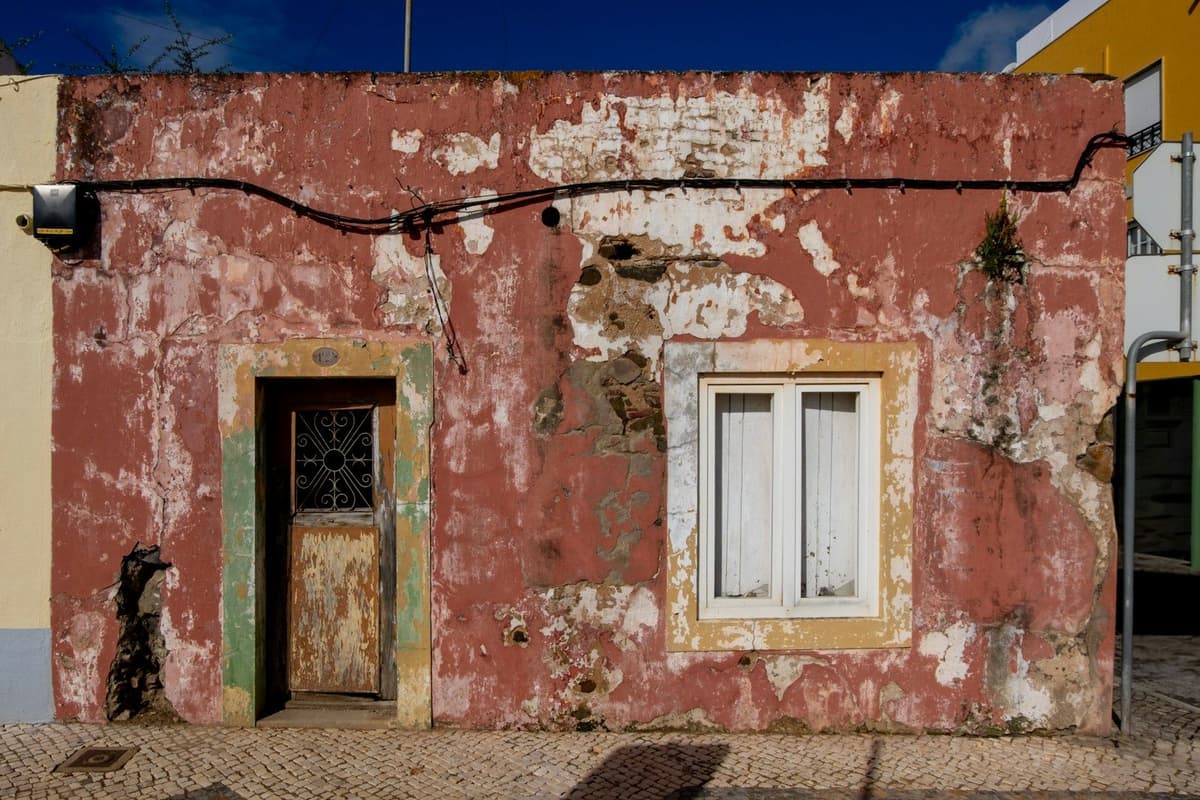
In many old homes in Lisbon, Porto or Coimbra, walls present moisture from capillary action or lateral infiltrations. In 2023, Portugal was the second country in the European Union with the most people living in homes with infiltrations and moisture2. This means that a significant portion of homes in Portugal requires extra preparation before receiving new paint, and this preparation represents time, materials and specialisation.
A quote calculated only by square metre assumes that the surface is in good condition, clean, dry and ready to receive paint. When this assumption doesn't hold true, the final value rises, because the actual work has increased.
Why square metre quotes are always indicative
When a professional presents a value per m², they're working with an estimate based on average conditions. But average conditions rarely exist. A wall may have mould localised in a poorly ventilated area, cracks near windows, or plaster degraded by years of accumulated moisture. Another wall, with the same area, may be impeccable, with no visible defects, only needing light cleaning and two coats of paint.
That's why any quote indicated by square metre should be confirmed after assessing the actual condition of the surfaces. This evaluation can be done through detailed photographs and videos or through an on-site visit. Both methods work the same way: they allow the professional to see what needs to be done before painting.
On our platform, we always request photographs and videos of surfaces before closing any proposal. This step serves to eliminate surprises during the work and ensure that the quote reflects the necessary work, not just the area to be painted.
The most common problems that affect price variation
There are some recurring problems that directly influence the final cost of a painting project, regardless of the area involved.
Active moisture and mould
If moisture is still present, applying paint over it solves nothing. Mould on walls is always a symptom of excessive moisture: condensation, infiltration or capillary action. A mould and moisture cleaning that doesn't resolve the cause doesn't solve the problem3. Before painting, it's necessary to identify the origin, address the cause and wait for the surface to dry completely. Depending on the type of moisture, it may be necessary to apply specific products, repair plumbing, improve ventilation or install moisture barriers.
Degraded or loose plaster
When plaster is peeling, cracked or blistered, there's no point painting over it. You need to remove the affected areas, apply new plaster, let it cure and only then prepare the surface to receive paint. This type of intervention adds days to the project timeline and materials to the quote.
Structural or settlement cracks
Not all cracks are the same. Fine, stable cracks can be treated with repair putty and primer. Wide, active cracks or those that cross the entire thickness of the wall require technical assessment and sometimes structural intervention before any painting.
Very porous surfaces or irregular finishes
Exposed brick walls, exposed concrete or unpainted surfaces absorb paint irregularly and require high coverage primers. Product consumption increases, application time also increases, and the quote adjusts accordingly.
What to do before accepting a quote
Before accepting any proposal, confirm that the professional has seen the space, either through detailed photographs and videos or through an in-person visit. Both methods are valid and work the same way: they ensure that the quote reflects the reality of the work.
Ask if the presented value includes surface preparation (cleaning, repairs, primer) or covers only the application of finishing paint. If there are visible problems (stains, cracks, peeling), request that the necessary work to resolve them be specified in the quote.
On our platform, all job details are recorded online and are visible to the client, the professional and the platform. This shared record ensures that the scope of work is agreed in writing before the start, avoiding misunderstandings or last-minute changes. Additionally, our platform always verifies that the professional is properly registered as self-employed or has an established company before presenting them as an option.
Payment works in two moments: 50% at the start, to reserve the date and purchase materials, and 50% at the end, after verifying that the work has been completed as agreed.
When a low quote ends up costing more
An initially low quote may seem advantageous, but if it doesn't include the necessary preparation, the final result will be unsatisfactory and the paint will start to peel, blister or stain within a few months. Redoing the painting costs more than having it done properly the first time.
Choosing a realistic quote that includes the correct diagnosis and appropriate preparation work is the only way to ensure that the paint lasts for years and that your investment doesn't go to waste after one or two seasons.

Ready to paint?
Get free quotes from verified local painters in minutes. No commitment.
Sources
External sources open in a new tab.